Evidence
Guillaume Pinard conducts investigations, observes meticulously, accumulates data, and proceeds by hypotheses and associations. In general, the artist claims to have no formal research. Instead, he slips into existing pictorial genres, wrapping himself in the cloak of déjà vu, of figuration, often archetypal, which activates and “illustrates” his own didactic logic. Fascinated by children’s literature, comics, encyclopedias, as well as popular science objects, Guillaume Pinard uncovers the holes and flaws in discursive representations beneath truths believed to be eternal. Less concerned with providing reasons than passing on meaning, his investigations reveal what the regimes of truth of an era conceal: exoticism, colonialism, sexism, imperialism, anthropocentrism… In other words, all the power relations that lie within the constitution and transmission of knowledge and imaginaries. As a founder of the Racoon Academy, the artist-educator thus organizes a choral work in which everything responds to itself, becomes more precise, clarifies, and is interwoven with each other, in order to “inform reality.” Images produce writing, and writing produces images that, over time, prove to be the pieces of evidence necessary to elucidate a case.
Compiled on poorly or not indexed blogs, his investigations from now on borrow from yesteryear naturalists, their methods of exploration, prospecting, inventorying, and mediation, in order to better break free from them. Since settling in the small village of Meillac, in Ille-et-Vilaine, the artist has fallen into a new vortex: a world populated by strangers, where time flies by at breakneck speed, space expands, and drama and sex punctuate the daily lives of filthy, harmful, parasitic, or invisible beings. Shit flies, bedbugs, moths, Temnothorax nylanderi, Isotomurus maculatus, Araneus diadematus…
The exhibition L’île aux mouches (Fly Island) is a disturbing testimony of this encounter, where, for once, everything starts from the end: the tomb of a springtail named the Pharaoh of Mycelium.
Equipped with macro lenses and logbooks, using maps, lists, and phylogenetic trees, Inspector Pinard becomes enamored with the poetry of binomial nomenclature, takes artificial taxonomies a little too far, is moved by metamorphoses, and follows the wanderings of migrations. The fabulous and fabulist worlds of insects and arachnids now dictate the artist’s asymptotic quest.
From a pupa to a doll, from a soft toy to a cuddly one, Guillaume Pinard composes an emotional bestiary, a genealogy of fetishes and projections. The fly pupa, a transitional form between larva and imago, opens up a politics of becoming, while the doll, a normative simulacrum of the human, mirrors our own metamorphoses. This soft and articulated bestiary escapes hierarchies, deadly classifications, and any promise of completion. Superheroes, reduced to textile envelopes with makeshif, costumed identities, lose their omnipotence. Exceptionalism and virility collapse in favor of a regime of care. Close to the transitional object dear to Winnicott, these figures alleviate the anxiety of the separation of worlds (children/adults; humans/non-humans; real/fictional; visible/invisible…). Contrary to a rational modernity that classifies, names, and isolates, the cocoon no longer promises the imago, the doll no longer teaches a model, the hero no longer saves the world. As emotional pieces of evidence, they become the witnesses of a non-heroic, non-spectacular reality, woven from unfinished metamorphoses, minority narratives, and precarious existences.
Marion Zilio, December 2025
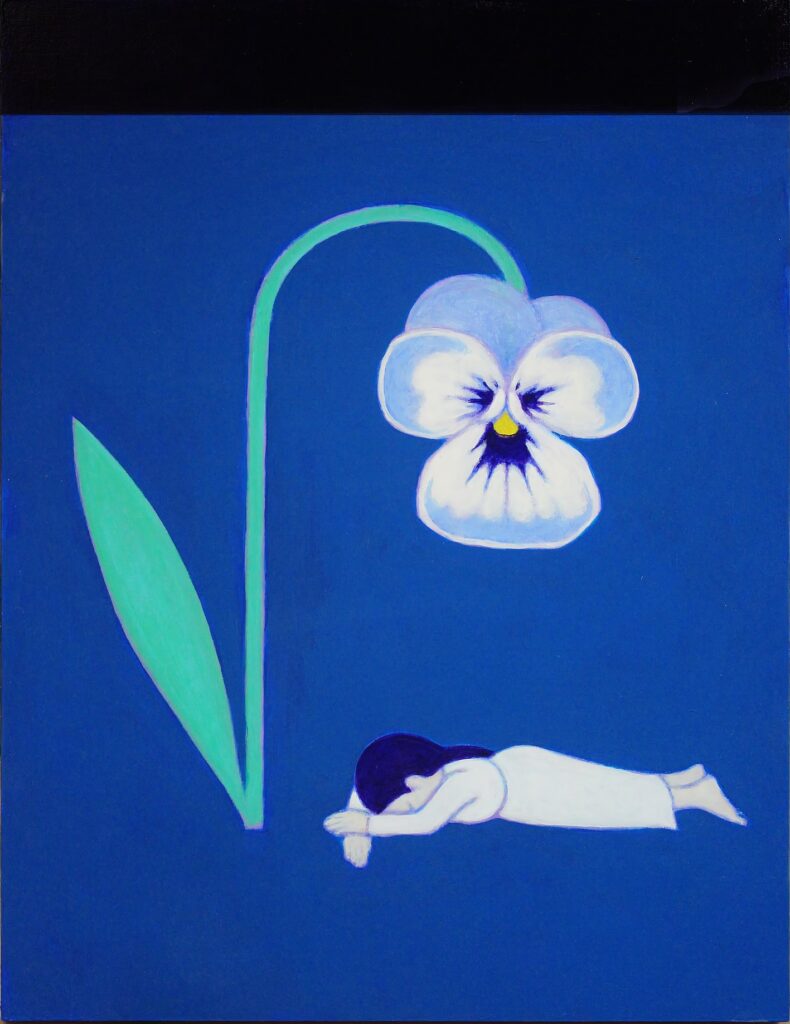
Guillaume Pinard
Pensées, 2025
acrylic on wood
50 x 38 cm
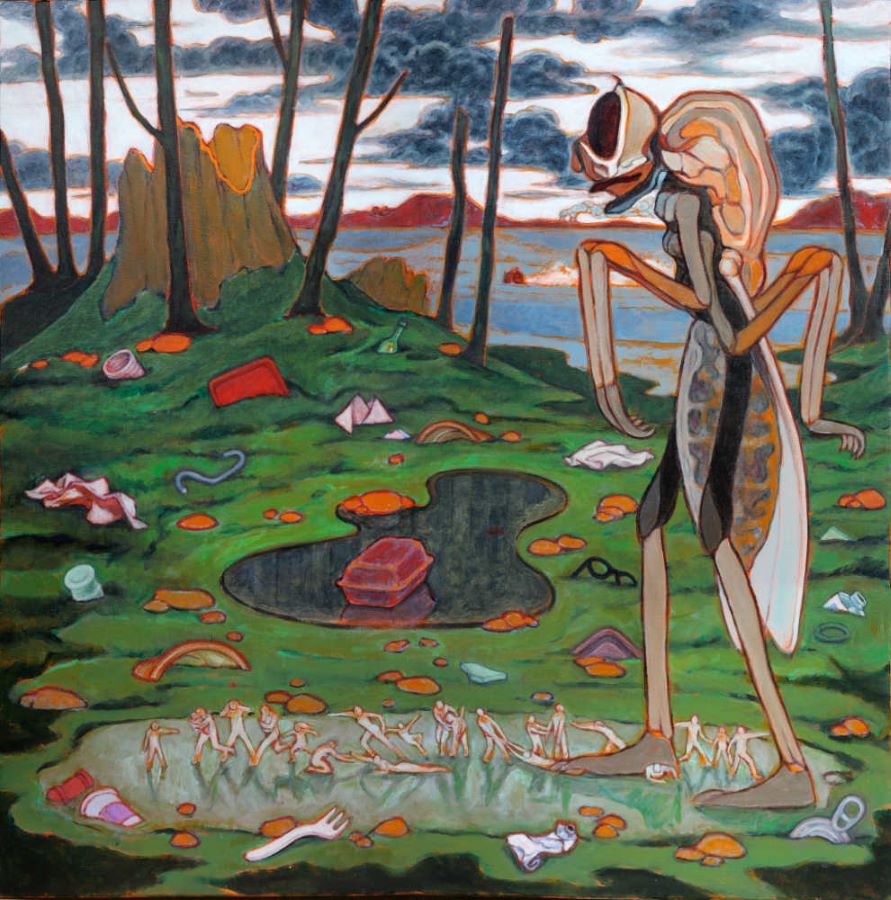
Guillaume Pinard
Les promesses de l’immonde, 2024
acrylic on canvas
80 x 80 cm
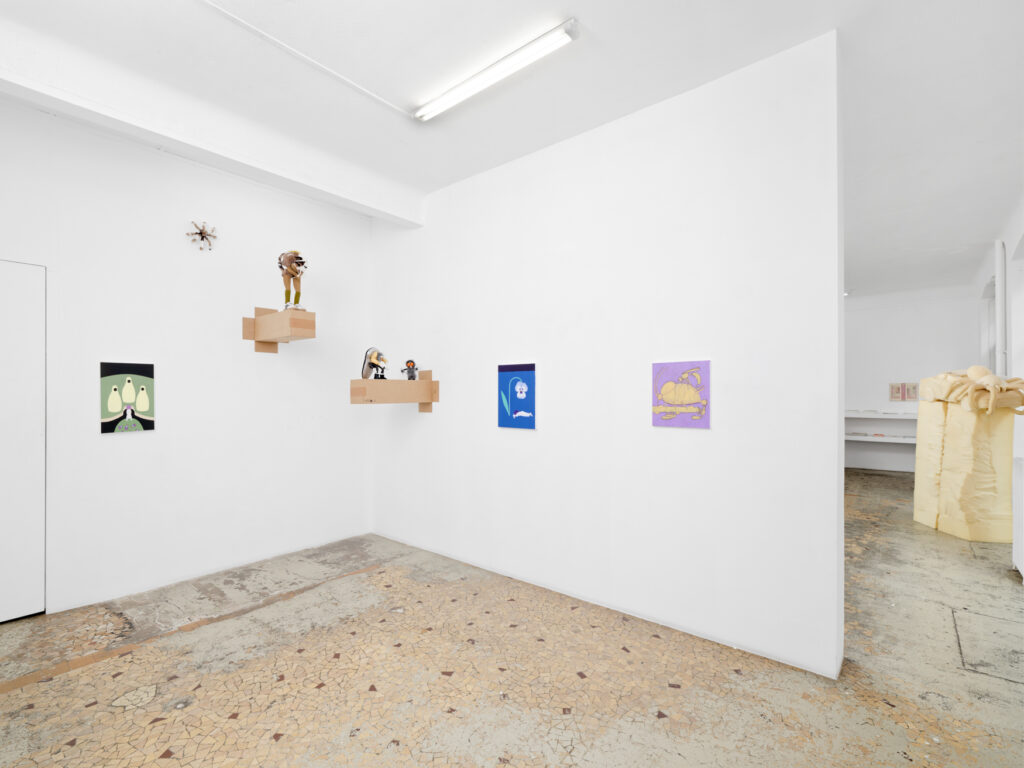 exhibition view, (photo Aurélien Mole)
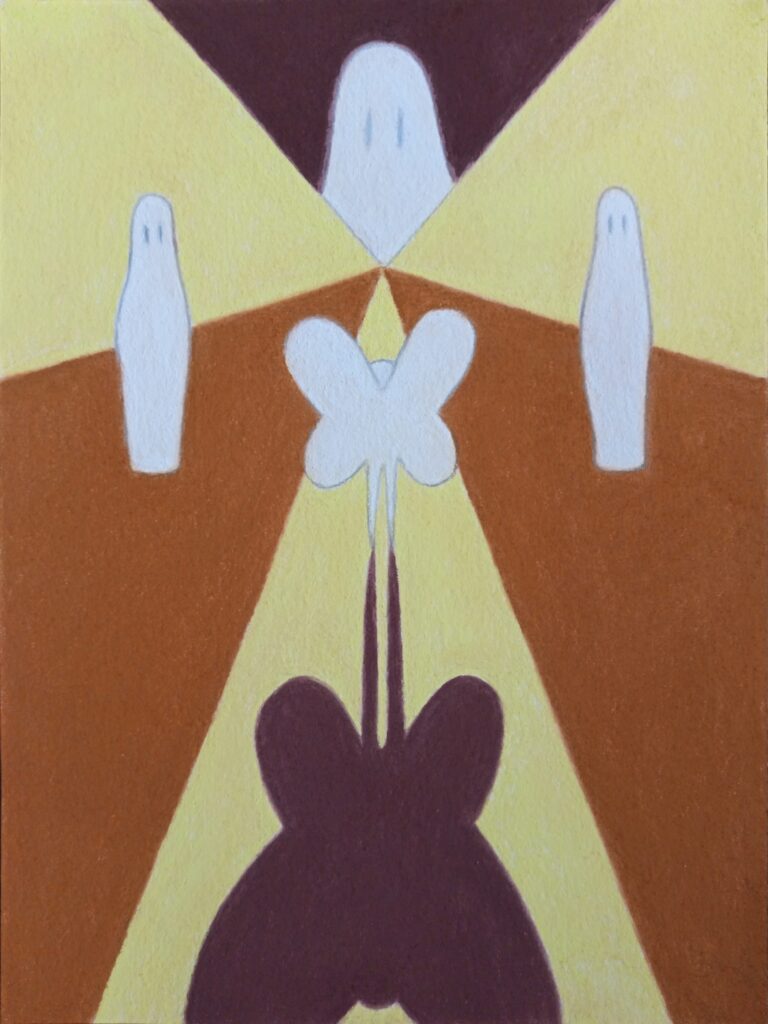
Guillaume Pinard
fantasme, 2026
pastel on paper
40×30 cm
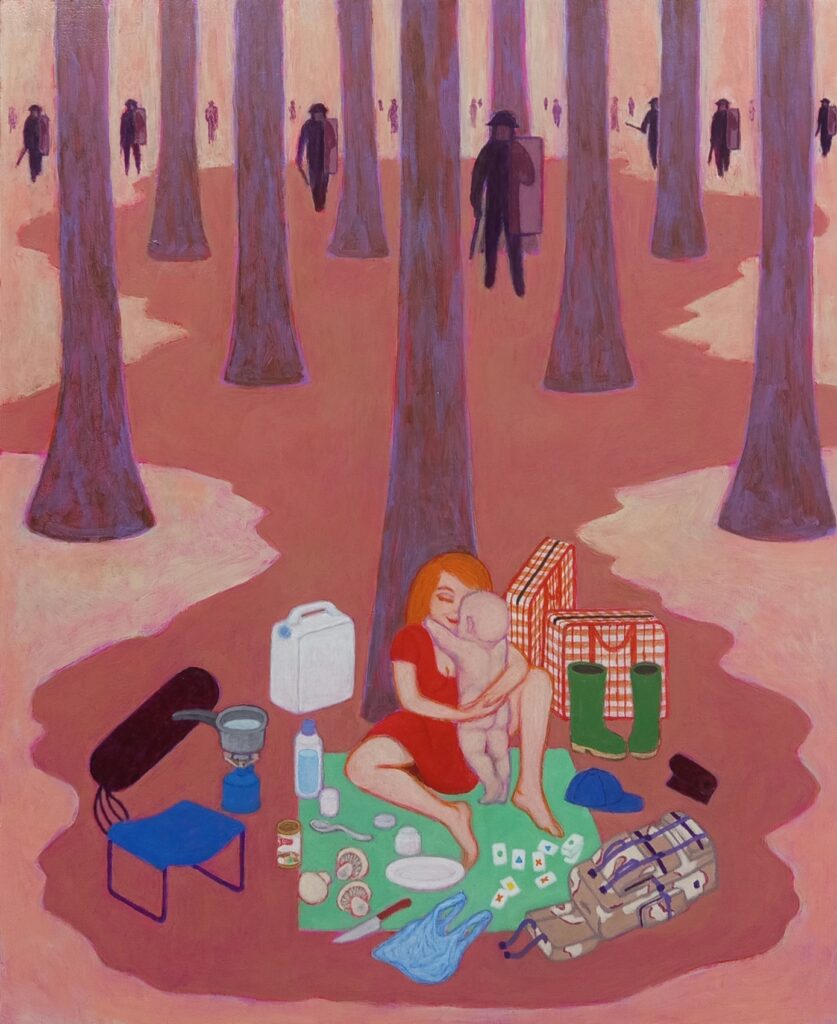
Guillaume Pinard
Tile family, 2025
acrylic on wood
50 x 38 cm
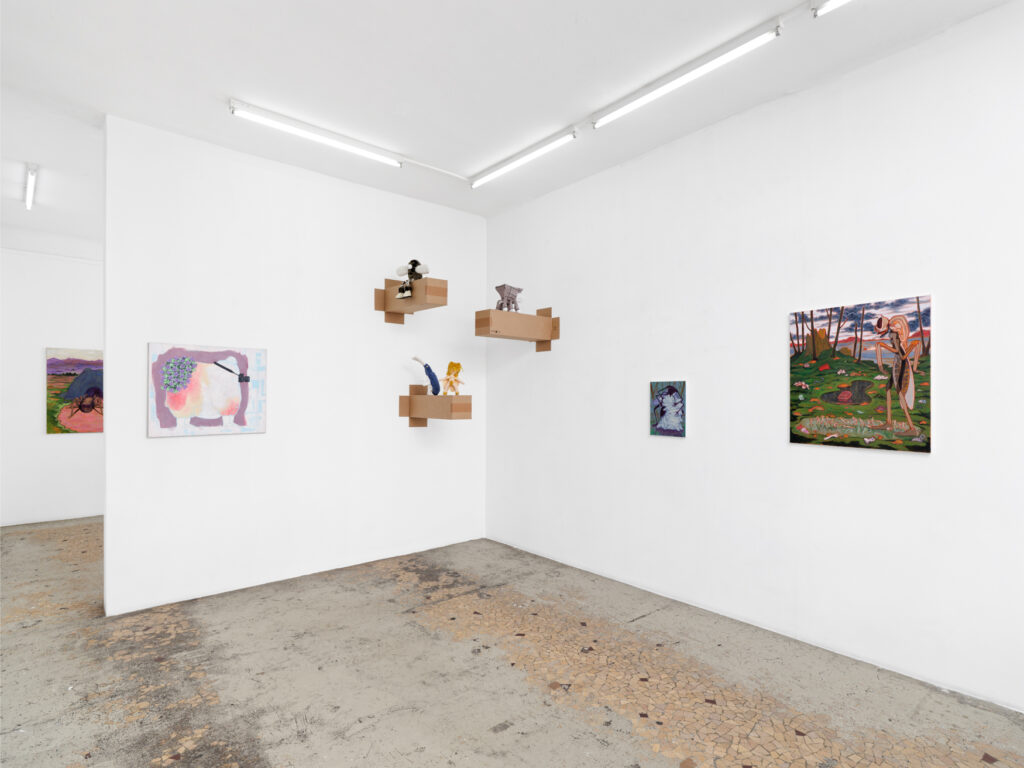 exhibition view (photo Aurélien Mole)
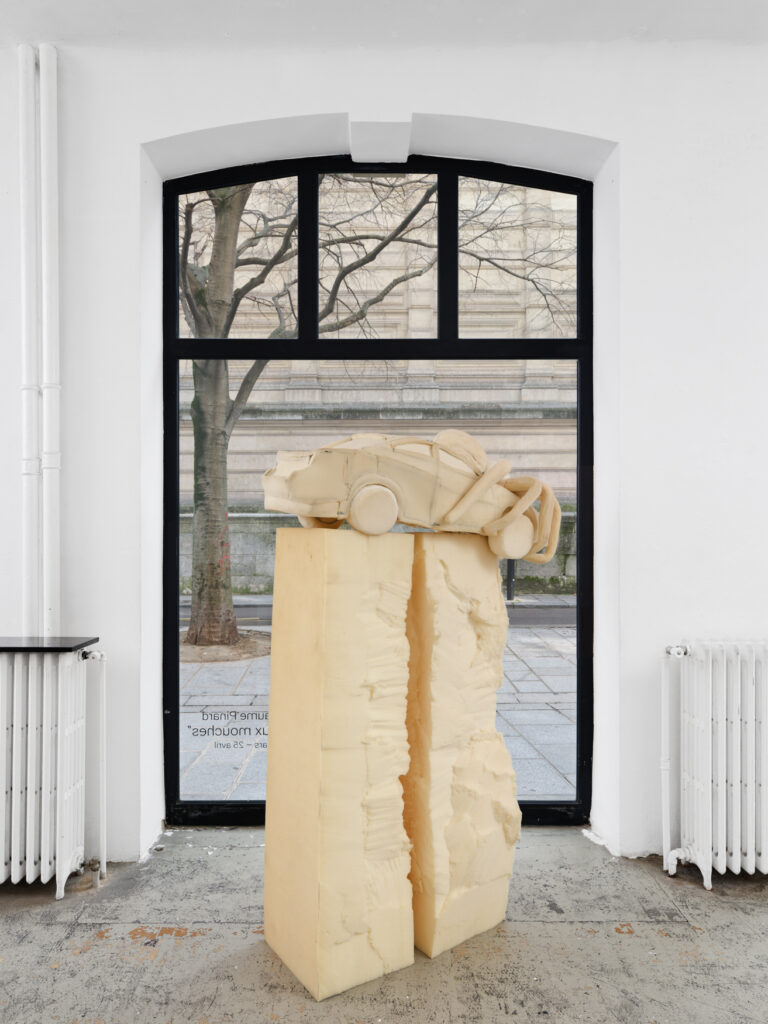
Guillaume Pinard
Cheiracanthe et Atenza, 2025
mix media
180 x 110 x 70 cm
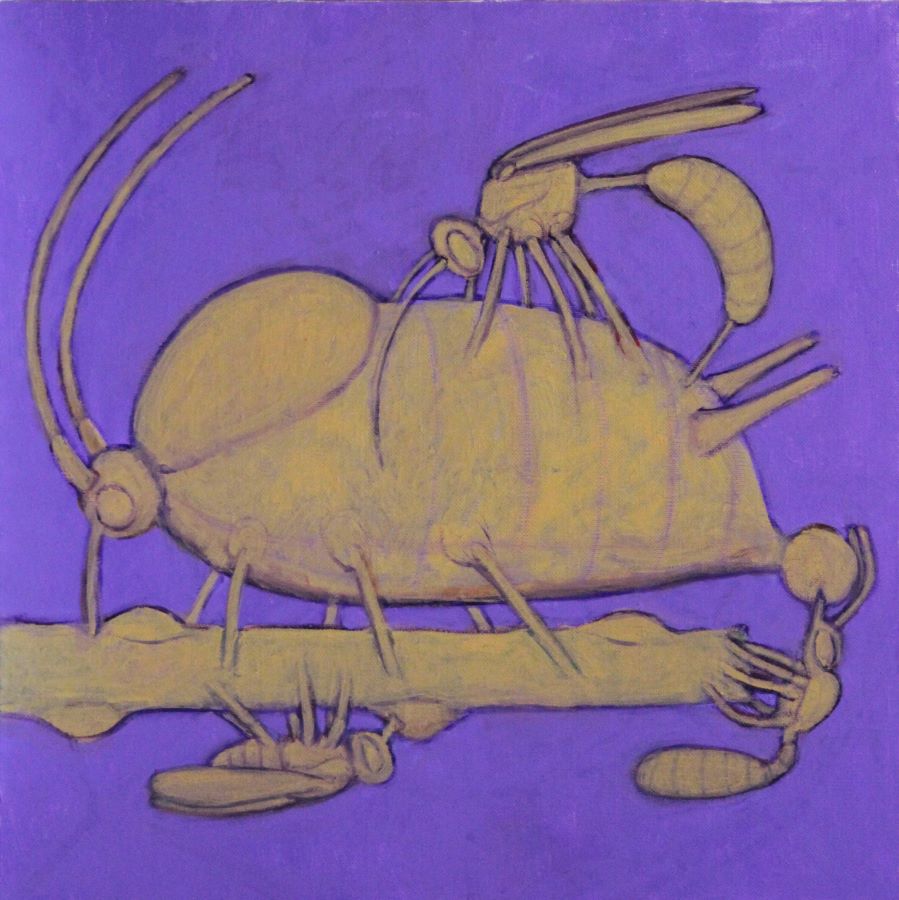 Guillaume Pinard
Le prodigue, 2023
acrylic on canvas
40 x 40 cm